
The Guided Development Intensive
A structured development process for transforming meaningful clinical experiences into publications, educational resources, professional visibility, payer communication assets, organizational learning, and long-term impact.
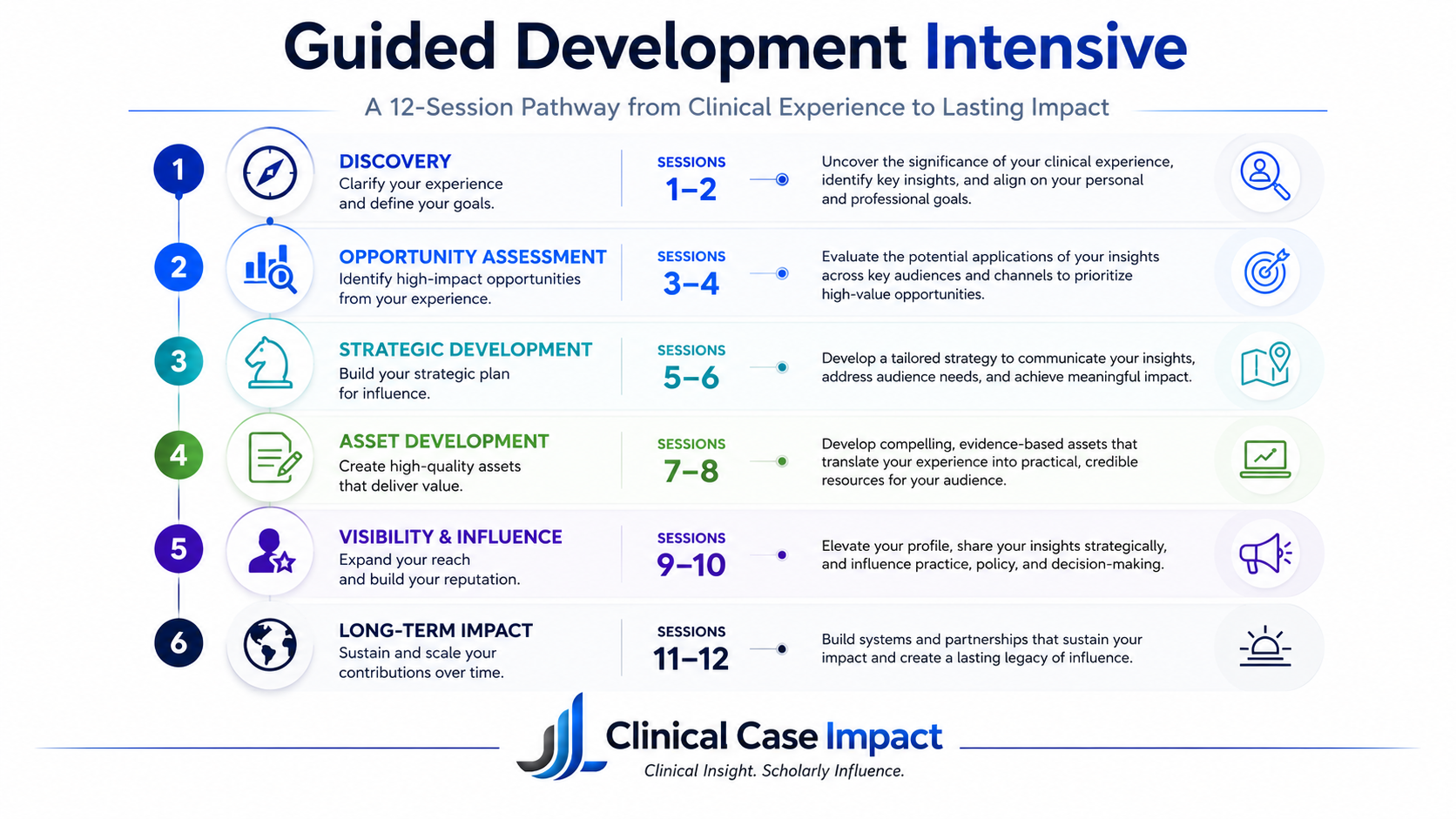
From Clinical Experience to Strategic Impact
Most clinicians begin with a meaningful case, an unusual presentation, a diagnostic challenge, or a clinical lesson worth sharing. The Guided Development Intensive helps transform that experience into a structured development pathway with clear opportunities, strategic priorities, and practical deliverables.
The goal is not simply to write a case report. The goal is to identify what the experience can become.
A Structured Pathway for Development
The Intensive guides clinicians through discovery, opportunity assessment, strategic development, asset creation, visibility planning, and long-term impact.
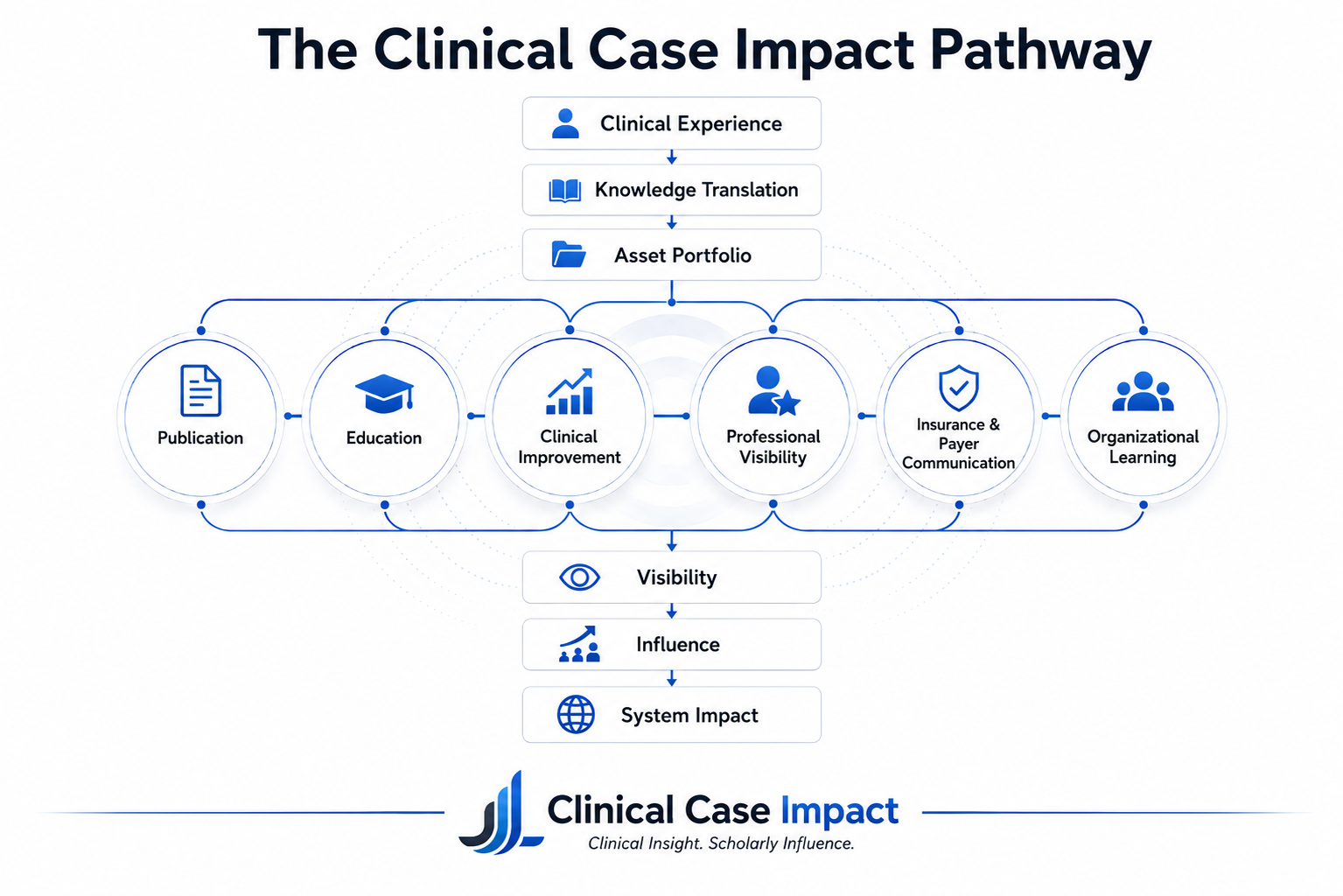
The Four Development Phases
-
Clarify the clinical experience, professional goals, organizational relevance, and potential development opportunities.
-
Develop the core message, literature positioning, strategic priorities, and contribution profile.
-
Build the manuscript blueprint, publication roadmap, and broader knowledge translation asset portfolio.
-
Plan conference opportunities, professional visibility, organizational use, and long-term development pathways.
What You Receive
The Guided Development Intensive produces practical, client-facing deliverables that help clarify direction, organize development, and support long-term impact.
• Opportunity Assessment
• Opportunity Report
• Strategic Development Plan
• Core Message Framework
• Literature Gap Map
• Manuscript Blueprint
• Publication Roadmap
• Knowledge Translation Asset Portfolio
• Visibility Plan
• Long-Term Development Roadmap
Who This Is For…
-
Clinicians with meaningful cases, unusual presentations, diagnostic lessons, referral challenges, or clinical experiences that may deserve broader development.
-
Healthcare educators, faculty, and residency leaders seeking structured scholarly development, teaching resources, or case-based learning opportunities.
-
Organizations interested in transforming clinical experience into provider education, best-practice resources, payer communication assets, and organizational learning.
How the Process Works
-
We begin by exploring the clinical experience and determining whether meaningful development opportunities exist.
-
Relevant case details, goals, context, and available documentation are reviewed.
-
Structured sessions move the project from opportunity identification to strategy, asset development, and impact planning.
-
Core reports, plans, frameworks, and asset development tools are created throughout the engagement.
-
The process concludes with a roadmap for continued development, visibility, and implementation.
Why This Is Different…
More Than Publication Support
Traditional support often focuses on:
• Manuscript writing
• Editing
• Journal submission
• Publication readiness
Clinical Case Impact focuses on:
• Knowledge translation
• Educational asset development
• Clinical improvement opportunities
• Payer communication potential
• Professional visibility
• Organizational learning
• Long-term impact
Publication may be one outcome. It is not the only outcome
FAQs
-
No. Many clinicians begin with little or no publication experience. The Intensive is designed to provide structure, guidance, and support.
-
Not necessarily. Some experiences may have stronger educational, clinical, organizational, or professional development value than publication value.
-
Timeline depends on the scope of the project, available documentation, development goals, and deliverables selected.
-
No. The process can support physicians, chiropractors, physical therapists, nurse practitioners, physician assistants, educators, faculty, and other healthcare professionals.
-
That is exactly why the discovery process exists. The first step is determining whether meaningful opportunities are present.